
The Product Manager (PM) role has become a lot more important in recent years as companies use Agile ways of working to innovate faster and keep up with what customers want. With technology changing so quickly, Product Management has gotten more complex — but that also makes it even more crucial for building successful products.
The Product Manager's profile
The responsibilities of a Product Manager vary across organizations, but at its core, Product Management is about strategically guiding a product's development, launch, and growth.
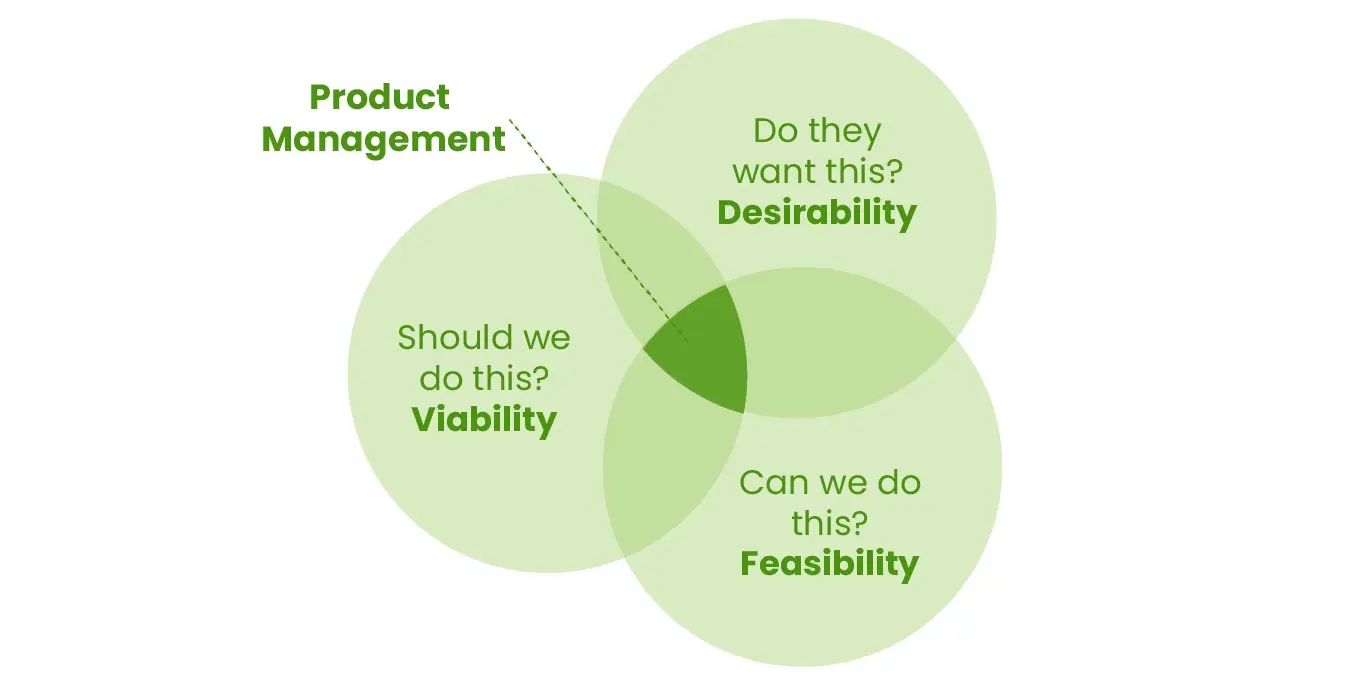
Product Managers operate at the crossroads of business, technology, and UX/design, constantly tackling critical questions:
- Do our customers really need this feature or product?
- Can we build it efficiently?
- Does it make sense to build it in light of our business goals?
A strong Product Management team keeps innovation aligned with both business strategy and user needs, driving long-term success. Yet various systemic challenges are increasingly undermining the effectiveness of the role. These are the most common ones I see today.
Challenge #1: Undefined or poorly defined roles
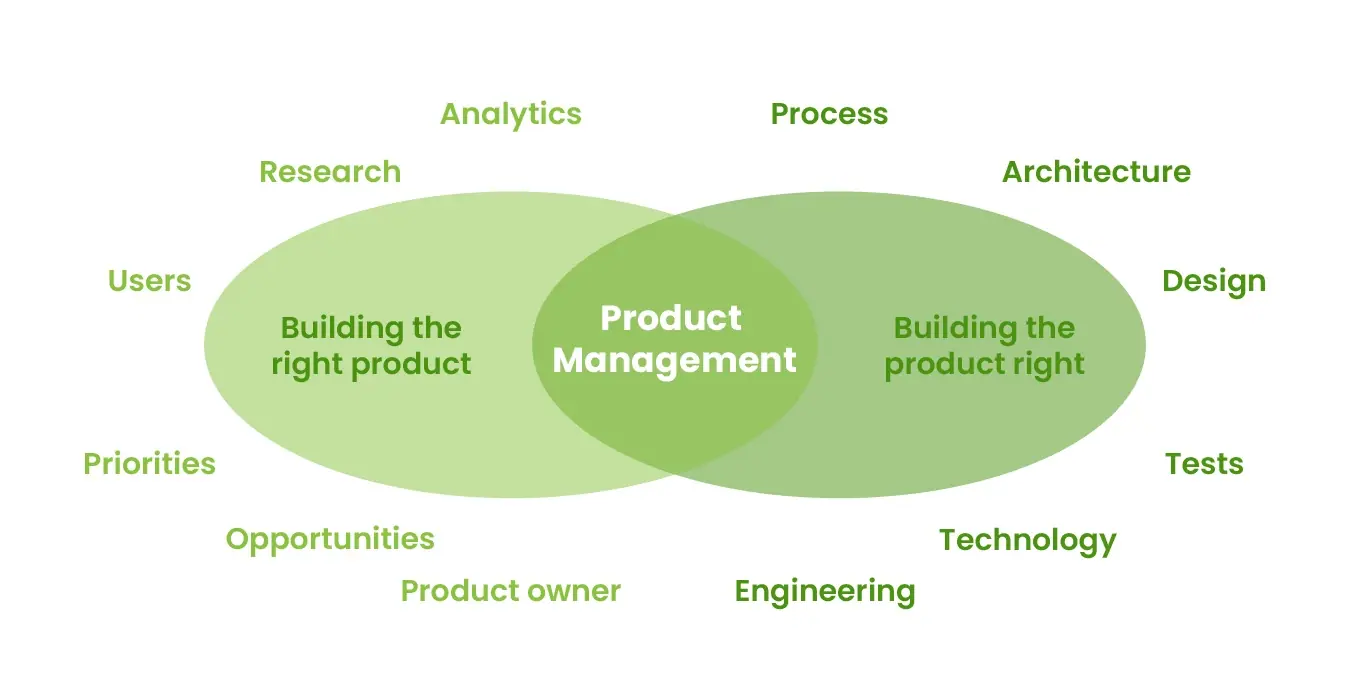
A lot of organizations — especially those new to Agile — aren't really clear on what Product Managers do. This often means PMs end up acting more like Project Managers, tracking timelines instead of guiding product strategy.
Solution: Companies must set clear expectations for PMs, differentiating them from Project Managers and Business Analysts. Leadership should make sure PMs have the authority to drive product decisions while fostering collaboration across teams.
Challenge #2: Forcing PMs to wear too many hats
Another common issue is that many organizations — especially large ones dealing with resource constraints — stretch PMs thin by making them also handle the Scrum Master and/or Product Owner roles.
PMs might be able to cover extra roles for a few sprints while those positions are being hired. But wearing multiple hats for the long term can have devastating consequences.
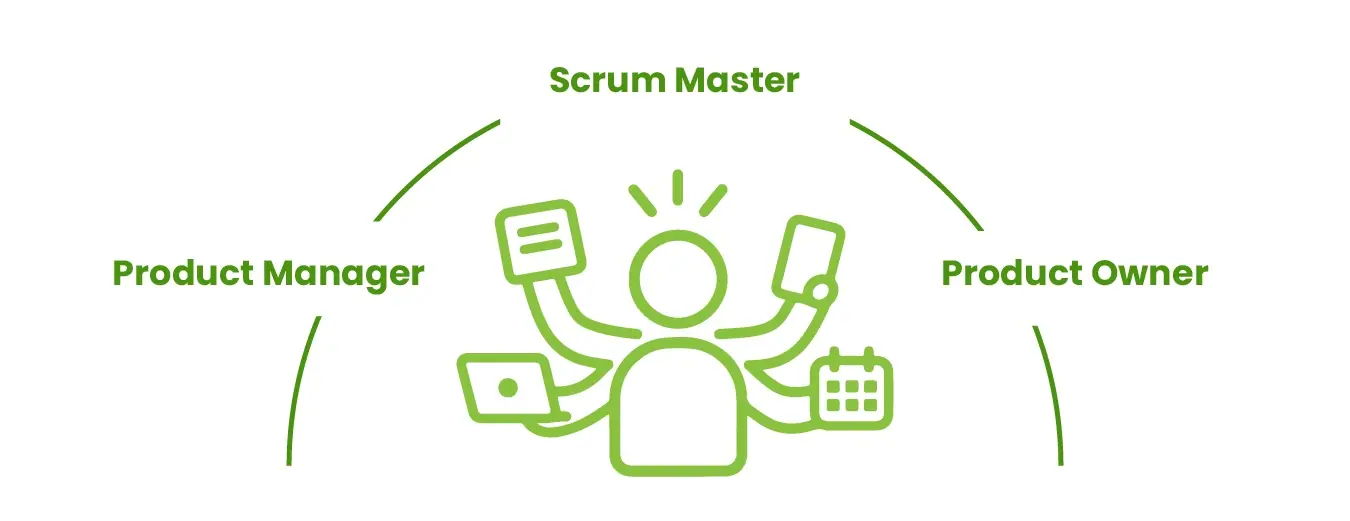
PMs who wear multiple hats burn out quickly, and the product teams suffer from not having a leader focused on solving complex problems for their customers and the business.
Solution: Organizations should let PMs focus 100% on leading teams and building successful products. Minimizing other distractions is imperative to maximize the value PMs deliver.
Challenge #3: Responsibility without authority
PMs are often given extensive responsibility for a product's success but lack the authority to make critical decisions. This becomes more pronounced in matrixed organizations, where cross-functional teams report to different leaders.
For example, I've seen executives suddenly mandate a shift in priorities based on anecdotal feedback or gut instinct, or dive into the weeds to "help manage" a team through a marketing beat or a high-profile launch.

I've also seen leadership add new people to a product team "to speed things up," where PMs struggle to integrate them effectively — especially if they lack Agile experience or knowledge of the product and its users.
All of these kinds of mismanagement disrupt workflows and can derail progress. Even worse, when leaders micromanage, it doesn't just lower morale and increase churn: PMs lose confidence and start relying on leadership for direction.
Solution: Organizations should give PMs greater decision-making authority within product teams. Leadership must trust PMs to guide the team and ensure alignment, rather than undermining the role with ad-hoc changes and micromanagement.
Leaders should spend the bulk of their time getting ahead of their product teams, focusing on business and product strategy at least a quarter (three months) out.
Conclusion: a guide for Product Management
For Product Management to thrive, companies must:
- Clearly define the role and differentiate it from project or program management
- Let PMs focus on their role instead of wearing too many hats
- Give PMs the authority they need to lead effectively
- Align executives with Agile principles and iterative development
- Balance technical, creative, and business skills based on product needs
- Make sure PMs lead product strategy rather than being sidelined by other teams
If organizations address these challenges, Product Management will continue to be a driving force behind innovation and business success.
Originally published on LinkedIn.